Interiority and Eros
The figure, the body, intimacy.
For several years, the human figure was at the heart of my artistic research. Through interiors, suspended atmospheres and an increasingly free approach to painting, I explored the body, intimacy and relationships.
This body of work belongs to a distinct phase of my artistic journey and traces the transition from the figurative painting of my early years towards a more personal exploration of colour, matter and expression.
A Glimpse into the Collection
Explore the works in the series. Further down, discover the story and details behind each painting.
1. Interiors
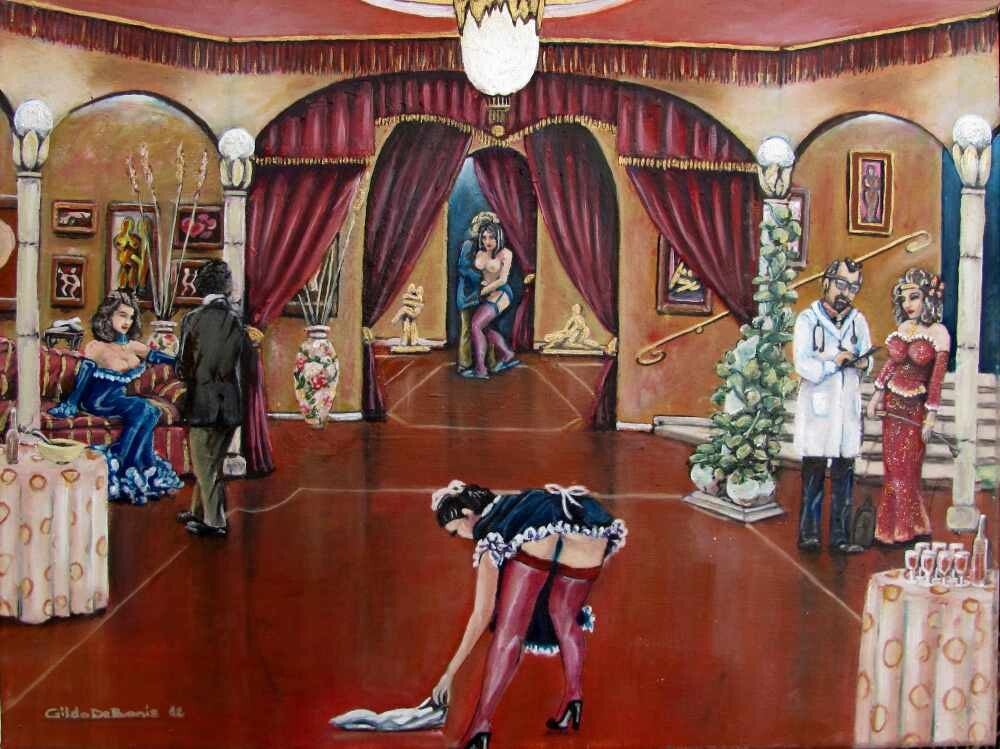
In the earliest works of this phase, the body is still placed within recognisable settings. Rooms, sitting rooms and imagined spaces become the stage for a narrative form of painting, in which the human figure still occupies the centre of the composition.
Maison Close
2010 · Oil on canvas · 25 × 35 cm
Artist's collection

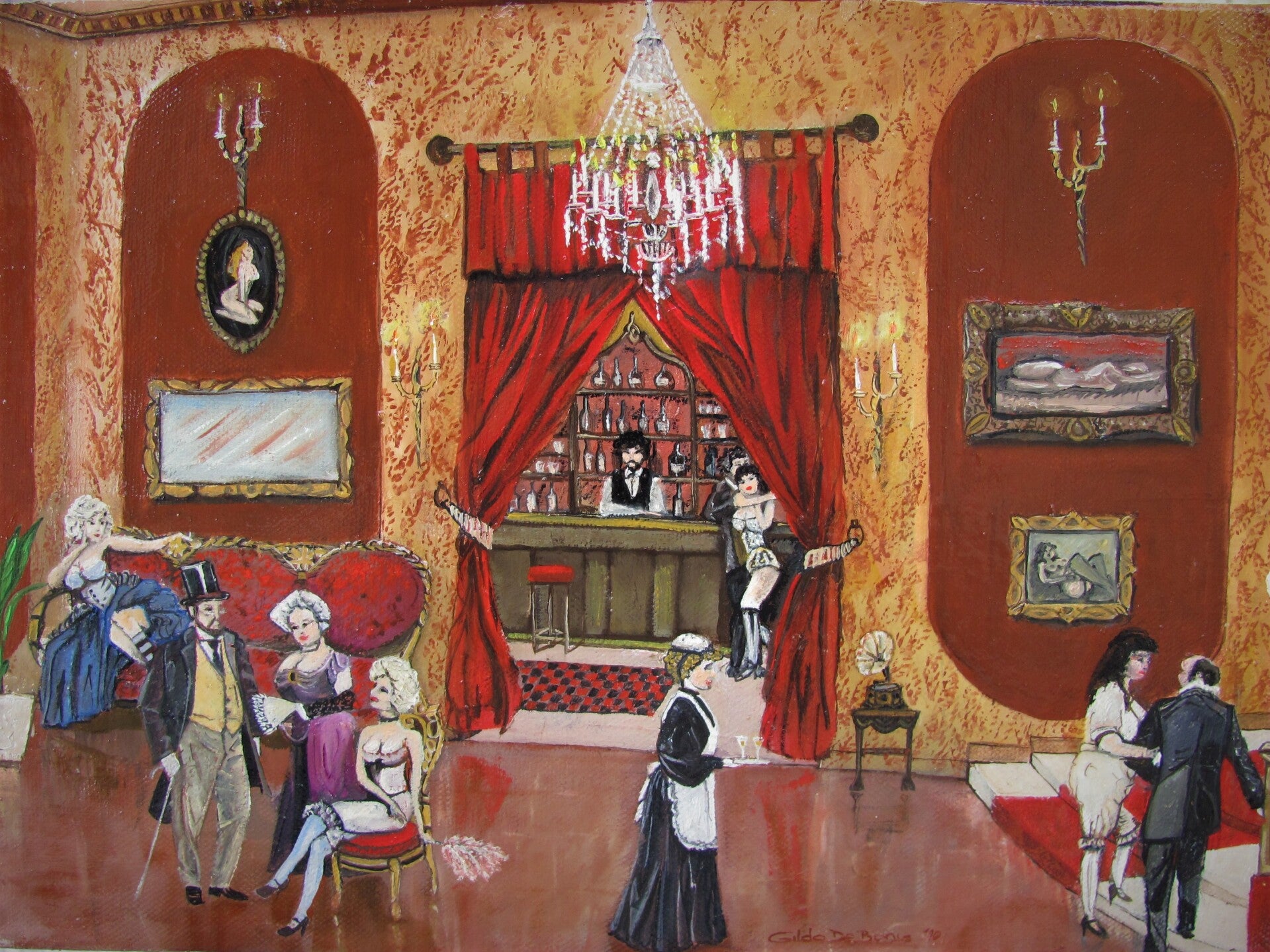
One of the interiors that characterise the first phase of my exploration of eros. The scene is constructed like a theatrical setting, populated by figures and details that evoke the imagery of brothels and maisons closes of another era.
At this stage, narrative painting is still central: space, characters and objects come together to create a scene in which painting retains a strong storytelling dimension.
Les femmes fatales
2010 · Oil on canvas · 30 × 40 cm
Private collection — Peru

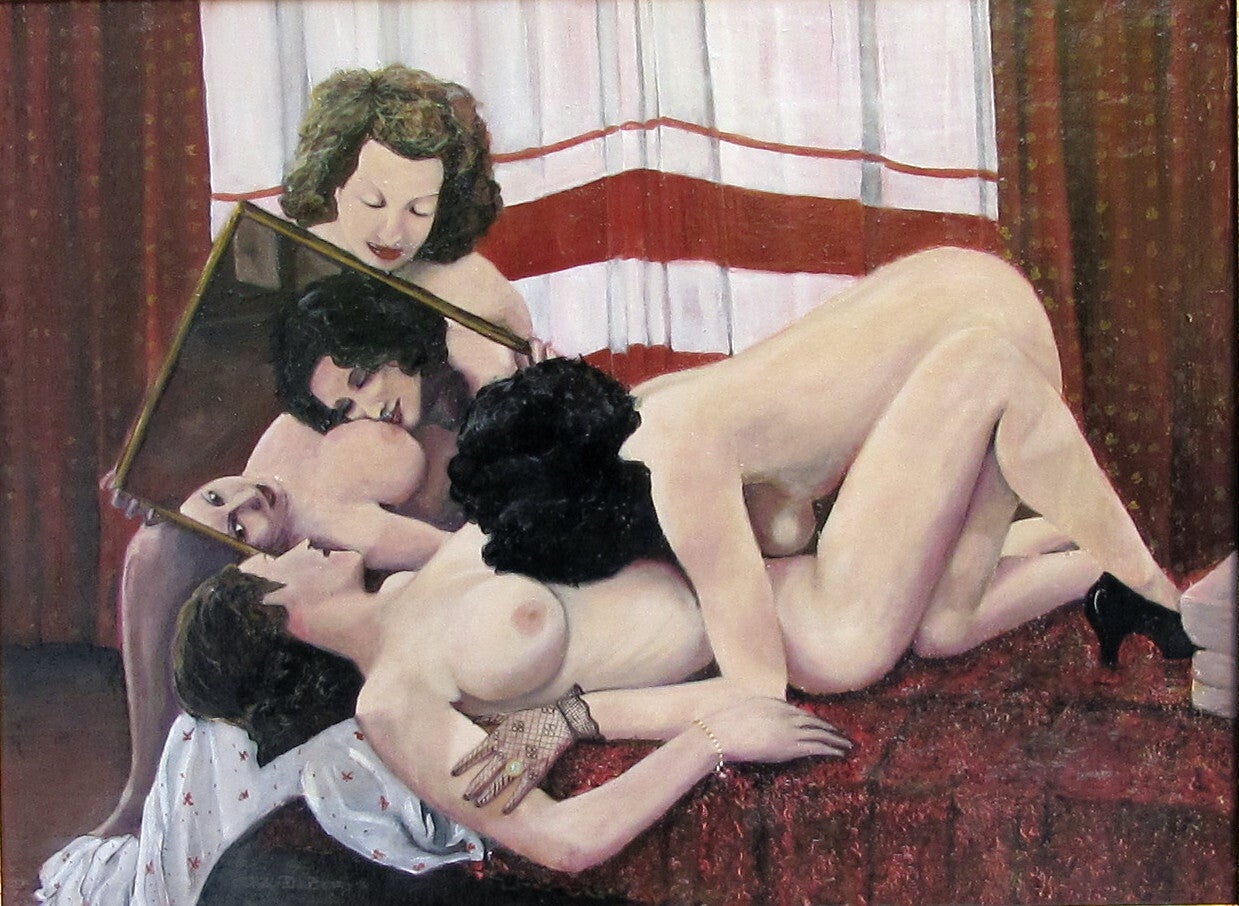
The mirror becomes part of the composition, multiplying bodies, gestures and points of view, deliberately blurring the boundary between what is happening in the room and what is reflected.
It is one of the most representative works of my figurative period devoted to interiors and eros, in which the scene is constructed almost like a small theatre. The work was later acquired by a collector and is now in Peru.
La pausa
2010 · Oil on canvas · 30 × 40 cm
Private collection

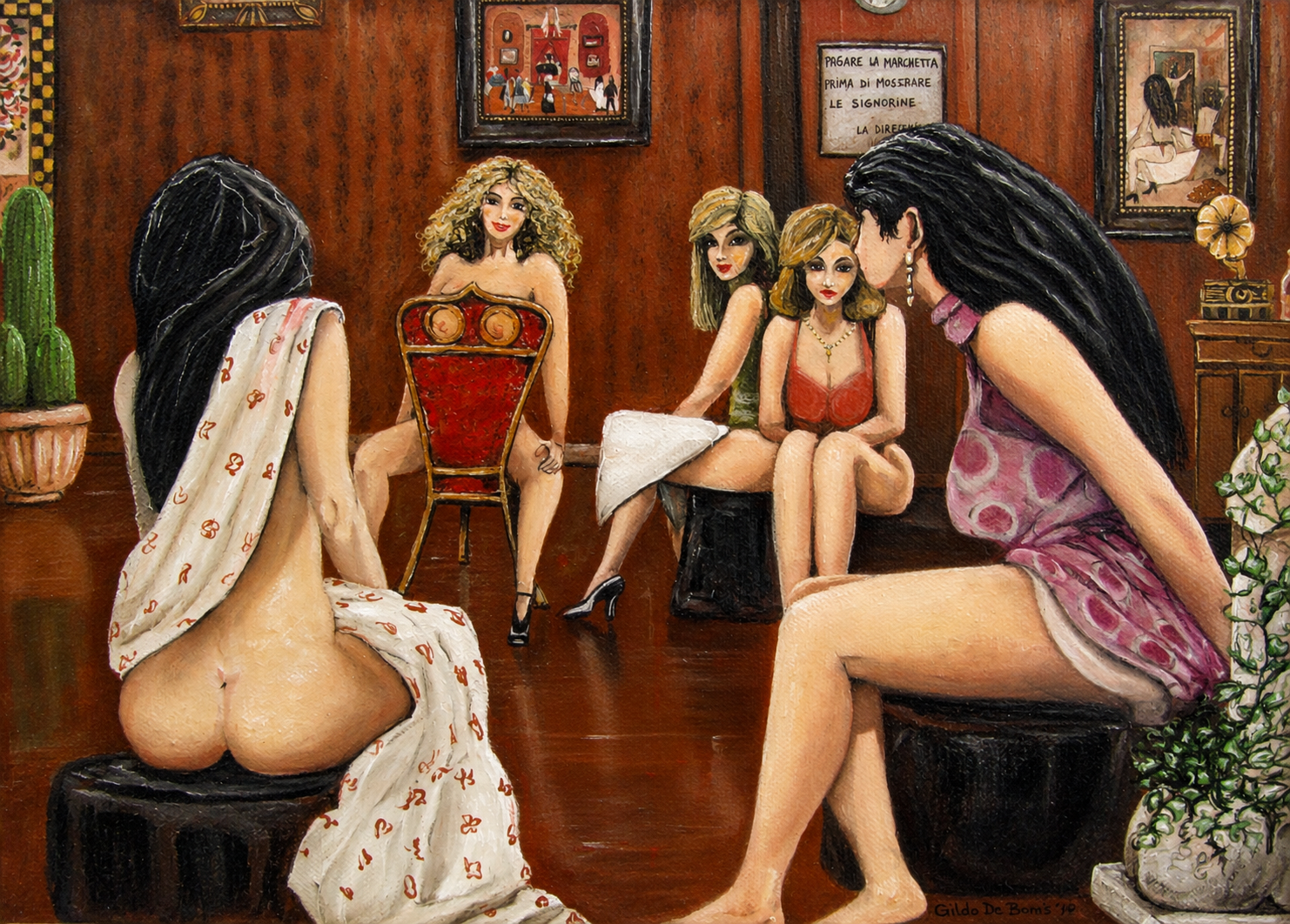
A moment of suspension in the everyday life of a brothel. The women are portrayed during a break, away from their work, in an interior that almost takes on the character of a private space.
Two of my paintings, Maison Close and Escort, appear on the walls, reproduced within the scene: small paintings within the painting, connecting this work to other images from the same cycle.
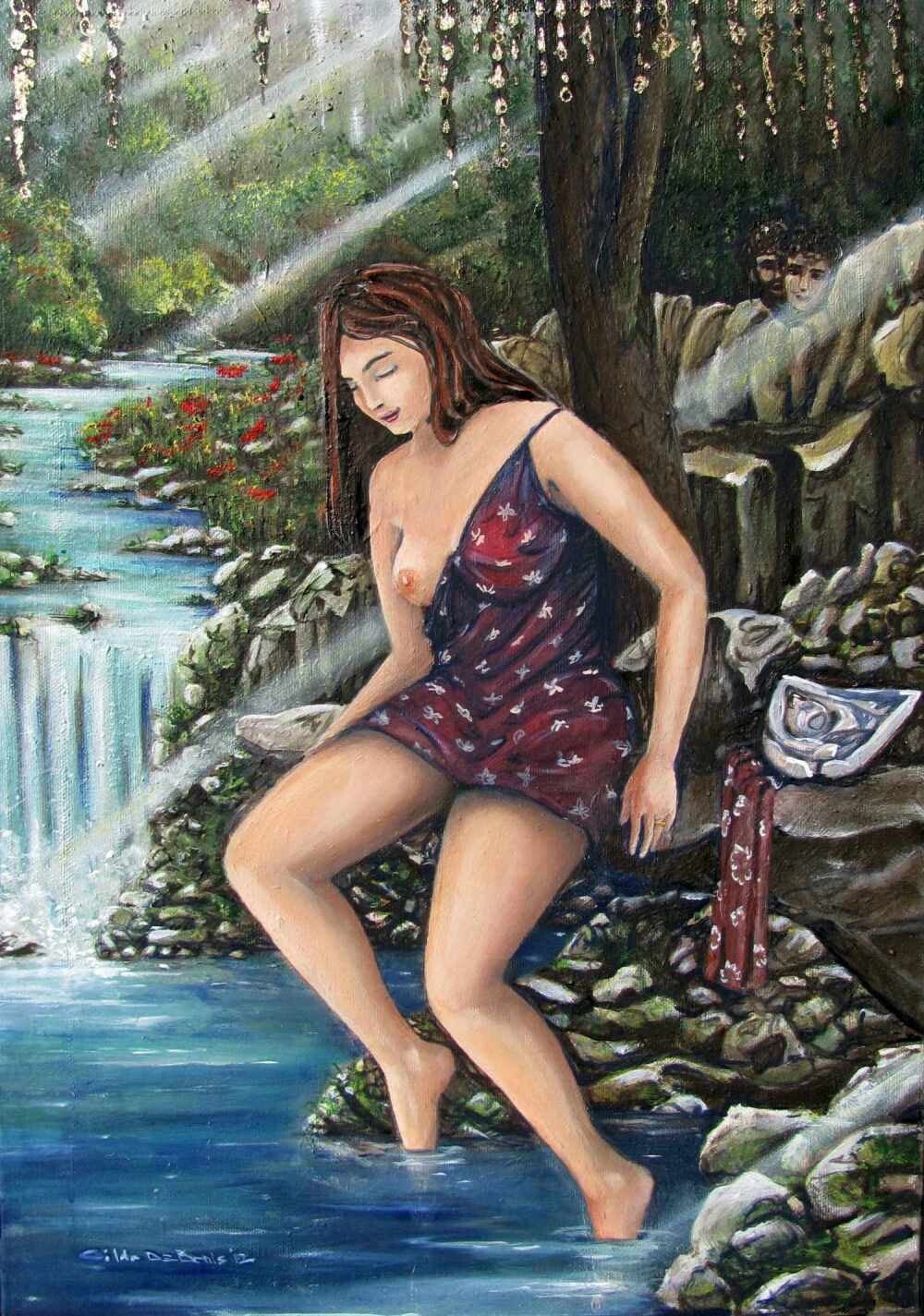
Susanna e i guardoni
2012 · Oil on canvas · 40 × 50 cm
Available with frame

A free and ironic reinterpretation of the story of Susanna and the Elders. The scene leaves behind its biblical setting and becomes an intimate moment immersed in nature.
But Susanna is not really alone: behind the tree, the “guardoni” — discreet yet mischievous presences — catch a glimpse of the scene, revealing the playful side of the title.
2. The Body Becomes Painting
Over time, the figurative scene begins to lose its central role. The body remains, but is progressively traversed by colour, drips and matter. The figures begin to merge with the surface, while narrative increasingly gives way to the gesture of painting.
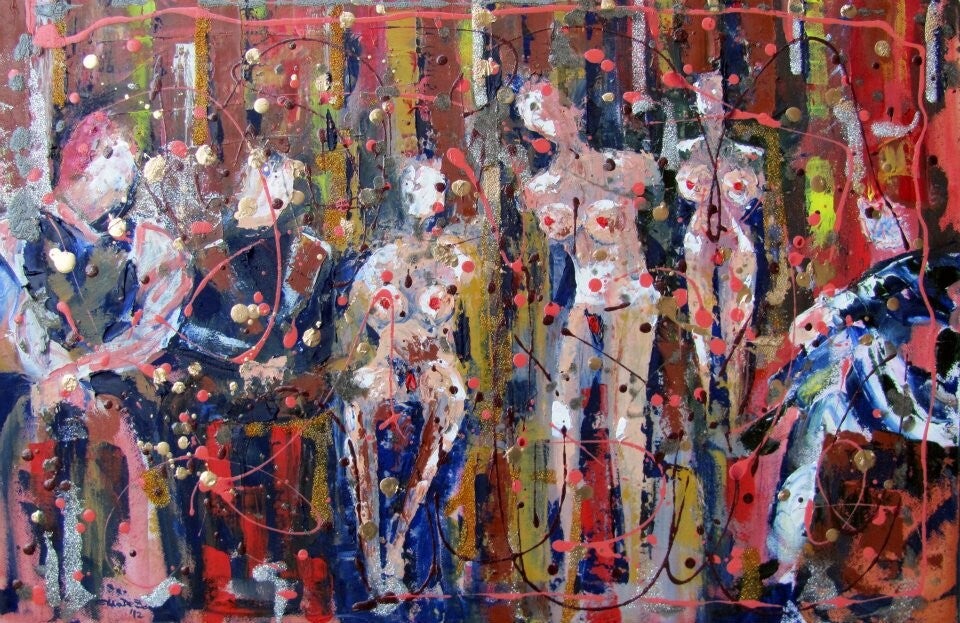
Bordello a carnevale
2012 · Oil and mixed media on canvas · 40 × 60 cm
Available with frame

The brothel scene is still recognisable, but representation begins to lose its central role. Figures and surroundings are traversed by colour, drips and gesture, gradually merging with the painted surface.
With Bordello a carnevale, figurative narrative gives way to a more instinctive and material form of painting: the body remains present, but begins to become painting itself.
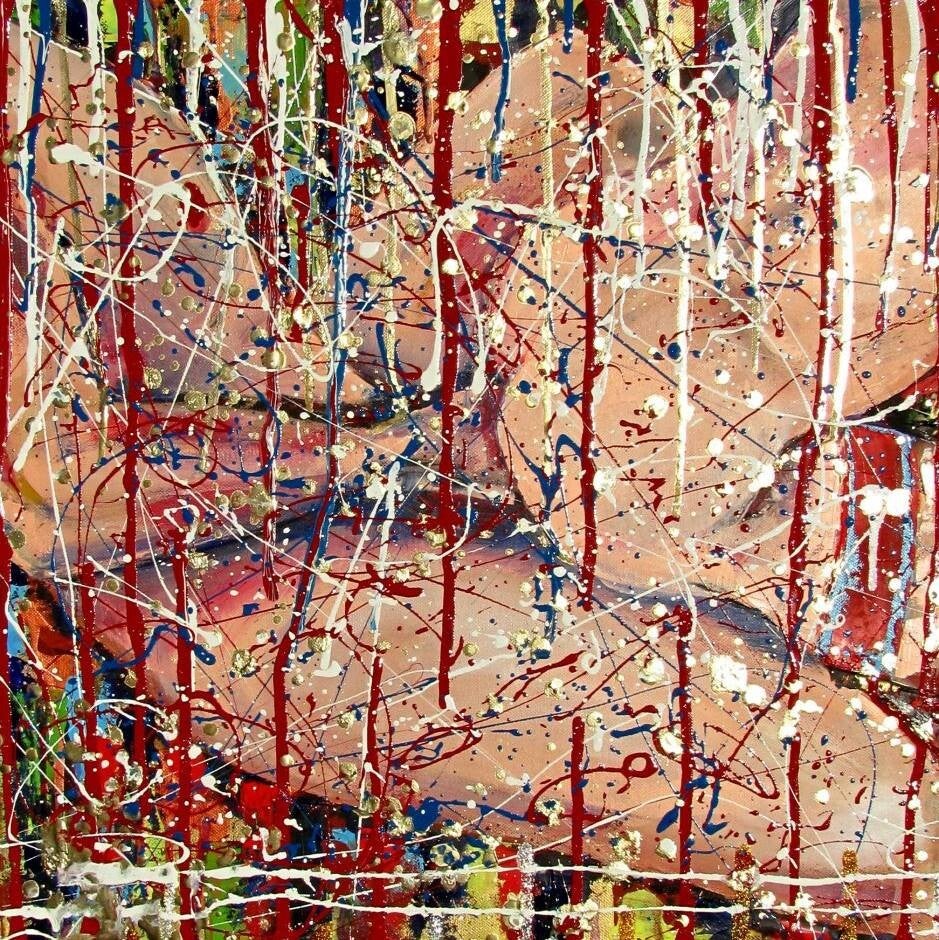
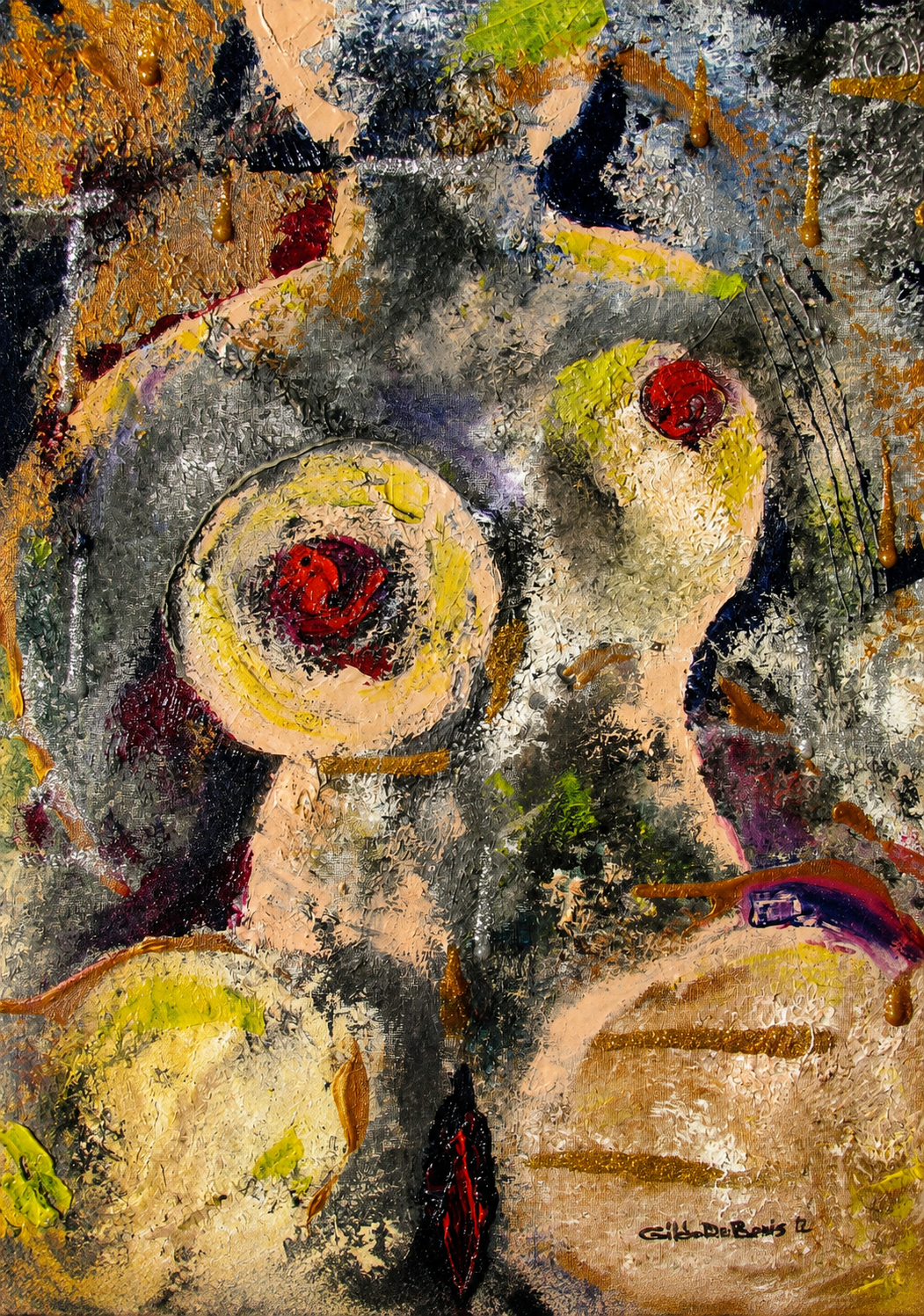
Sangue caldo
2012 · Oil and mixed media on canvas · 50 × 50 cm
Available

In Sangue caldo, the starting point is a real scene of intimacy, which gradually loses its immediacy through colour and matter. The bodies remain perceptible, but are no longer clearly distinguishable: they emerge and merge among marks, drips and overlapping layers.
The figurative image thus remains concealed beneath the surface, present without being immediately revealed. Desire is suggested through painting rather than narrated through representation.
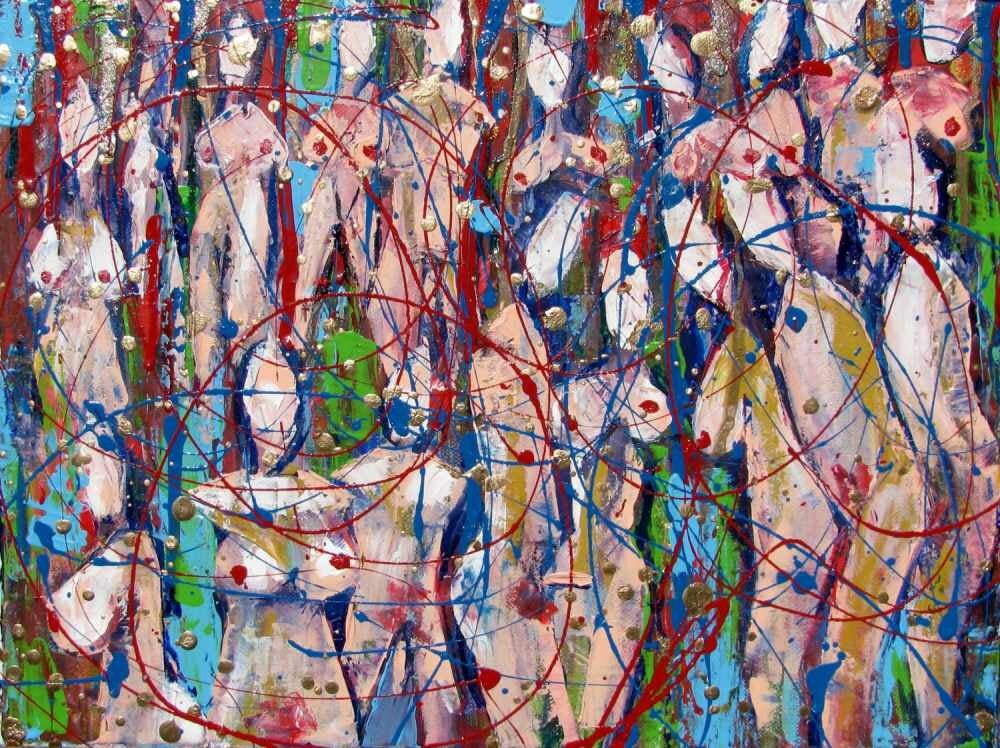
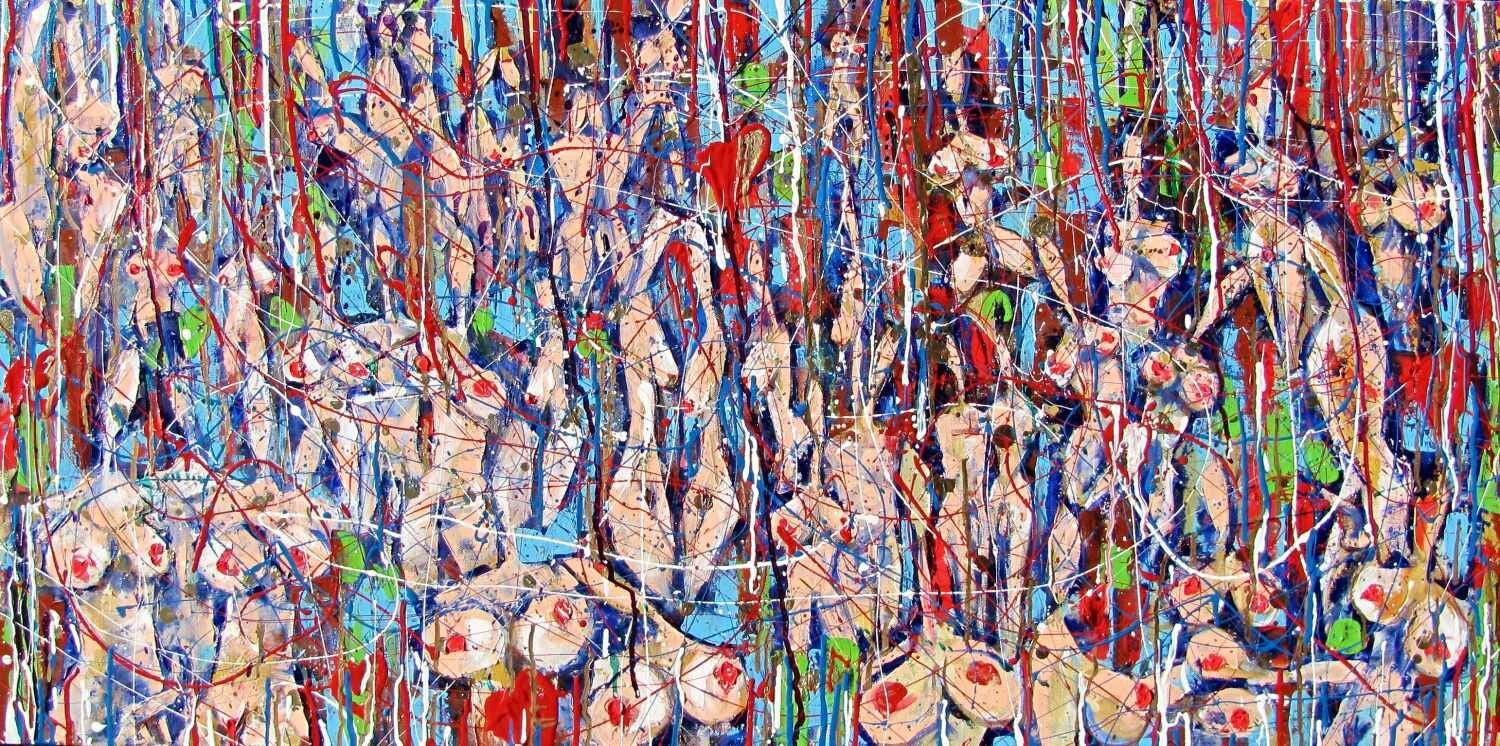
Erosgarden
2012 · Oil and mixed media on canvas · 120 × 60 cm
Private collection — Ischia

In Erosgarden, bodies multiply and intertwine until they become part of a single pictorial space. There is no longer an interior to contain them: the figures themselves, together with colour and gesture, create a kind of landscape of eros.
The figurative element remains recognisable, but gradually loses its boundaries, allowing bodies, marks and matter to coexist on the same surface.
Le mixité
2012 · Oil and mixed media on canvas · 30 × 40 cm
Private collection — acquired during the exhibition at Teatro Millelire, Rome

In Le mixité, the blending evoked by the title becomes the very principle of the composition. Bodies, marks and colour overlap, move through one another and gradually lose their boundaries, giving rise to a scene in which the gaze is free to follow its own path.
The work belongs to a phase of my artistic research in which I no longer sought to clearly separate figure from matter: one enters into the other, leaving the viewer free to reconstruct what emerges from the surface.
Lady Godiva
2012 · Oil and mixed media on canvas · 80 × 120 cm
Private collection — Rome

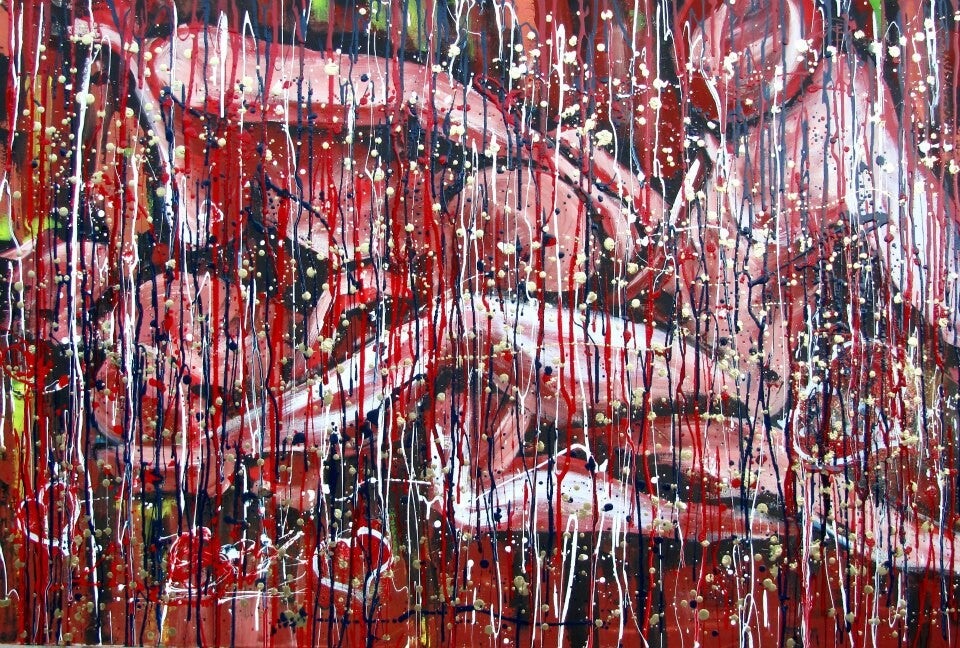
In Lady Godiva, three figures — two men and one woman — are joined in an embrace that forms the figurative core of the work. The scene, however, does not reveal itself immediately to the eye: colour, drips and matter move across the bodies, interrupting their outlines and allowing them to emerge gradually from the surface.
Eroticism therefore lies not only in the subject itself, but in the relationship between what the painting reveals and what it conceals. The bodies remain present, yet it is the viewer who must discover them through marks, colour and matter.
Lady Godiva was exhibited in my solo exhibition Dal classico all’erotico informale at Villa Pirandello in Rome in 2012, where it was acquired during the exhibition. During the same period, the work was also featured in Inside Art, in an article devoted to my exploration of informal eroticism.
Sul fianco
2012 · Oil and mixed media on canvas · 40 × 50 cm
Private collection — Trieste

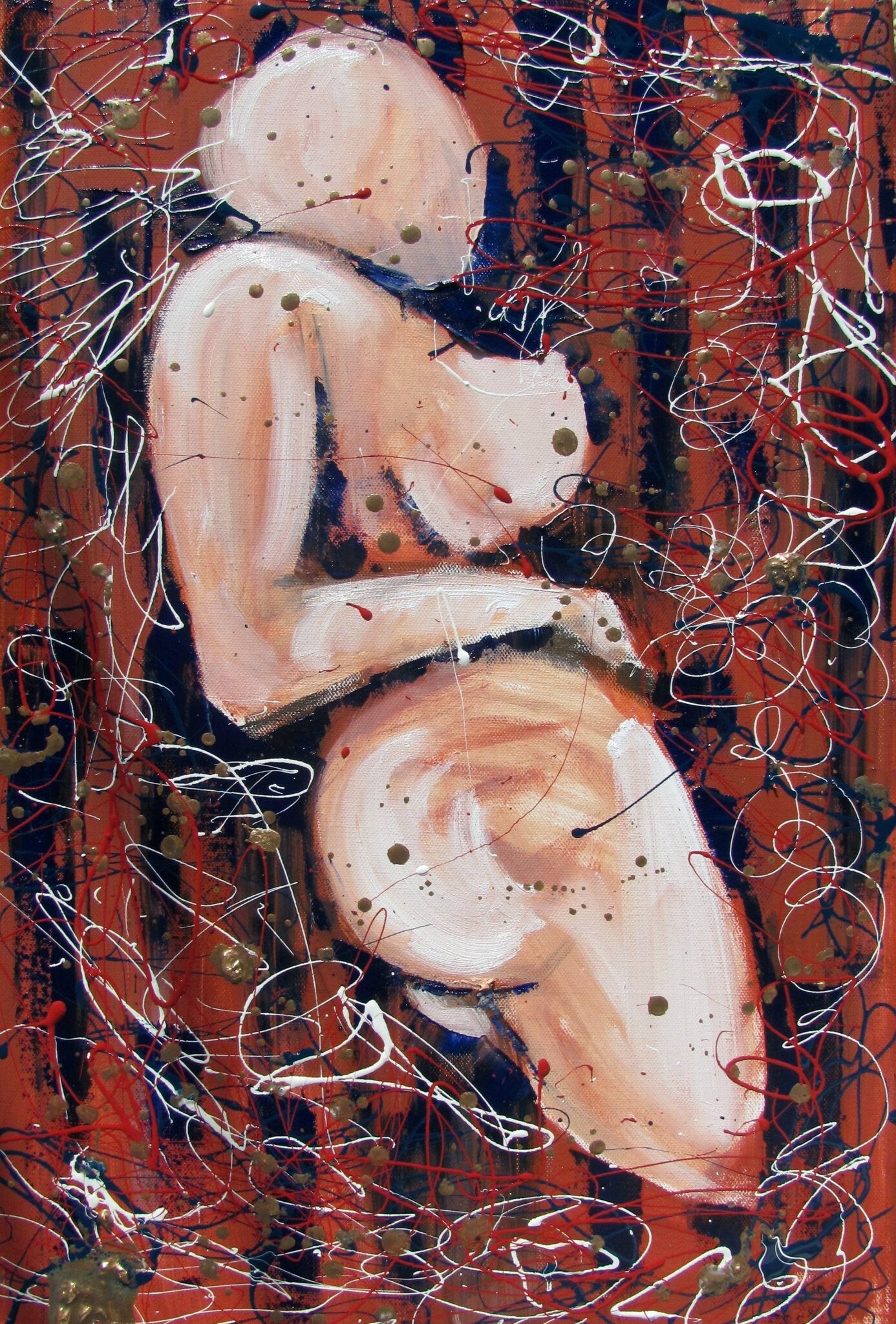
Created for the exhibition Niente mi pettina meglio del vento – L’arte ha sempre un taglio alla moda, devoted to raising awareness of alopecia areata and held in 2013 at the Galleria Espositiva Baccina 66 in Rome, Sul fianco was created within a context different from that of the other works from this phase.
The body is curled into an intimate pose and remains clearly recognisable, while marks, drips and matter move across its surface. Figuration and pictorial gesture coexist within the same space, in a painting that never completely abandons representation.
The work was later acquired, several years afterwards, and is now part of a private collection in Trieste.
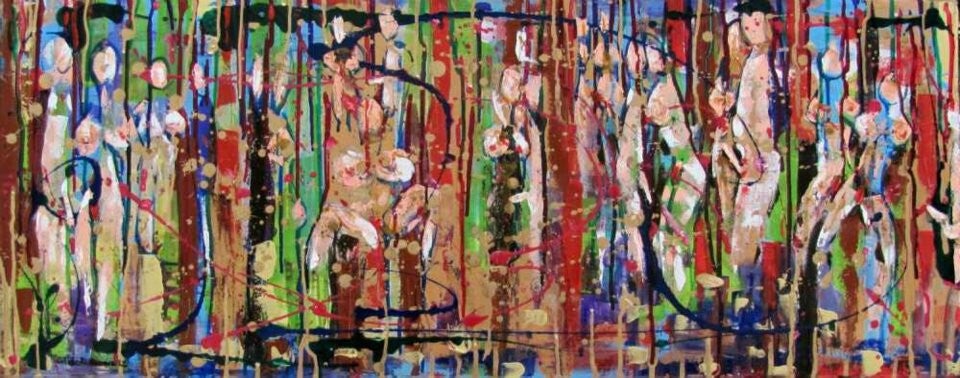
Erosland
2012 · Oil and mixed media on canvas · 40 × 100 cm
Private collection — London

In Erosland, bodies multiply and intertwine until they become part of a single pictorial fabric. The figures are still recognisable, but their boundaries dissolve into colour, marks and overlapping layers, transforming the scene into a suspended space between figuration and matter.
Eros is no longer entrusted to the narrative of an interior or to a single scene: it moves through the entire composition, becoming rhythm, movement and colour.
The work was later acquired for a private collection in London and shipped directly to England.
3. Towards the Informal
In some works, the figure almost completely dissolves. I no longer necessarily begin with a scene to represent: matter itself suggests what may emerge on the canvas.
Desideria
2012 · Oil and mixed media on canvas · 40 × 50 cm
Available with frame

Desideria was born from a canvas that seemed to have nothing left to tell. It had been painted and then covered with layers of matter by someone I knew who, rather than throw it away, decided to try to save it.
I looked at it for a long time, turning it again and again, searching for an image within what apparently was nothing more than colour and matter. Until, changing my point of view once more, I saw a figure emerge. From that moment on, it was no longer a question of inventing a subject, but of following something that seemed to have already been hidden within the canvas.
From that discovery, Desideria was born: a work constructed not from a preconceived image, but by allowing the painting itself to suggest what to seek.